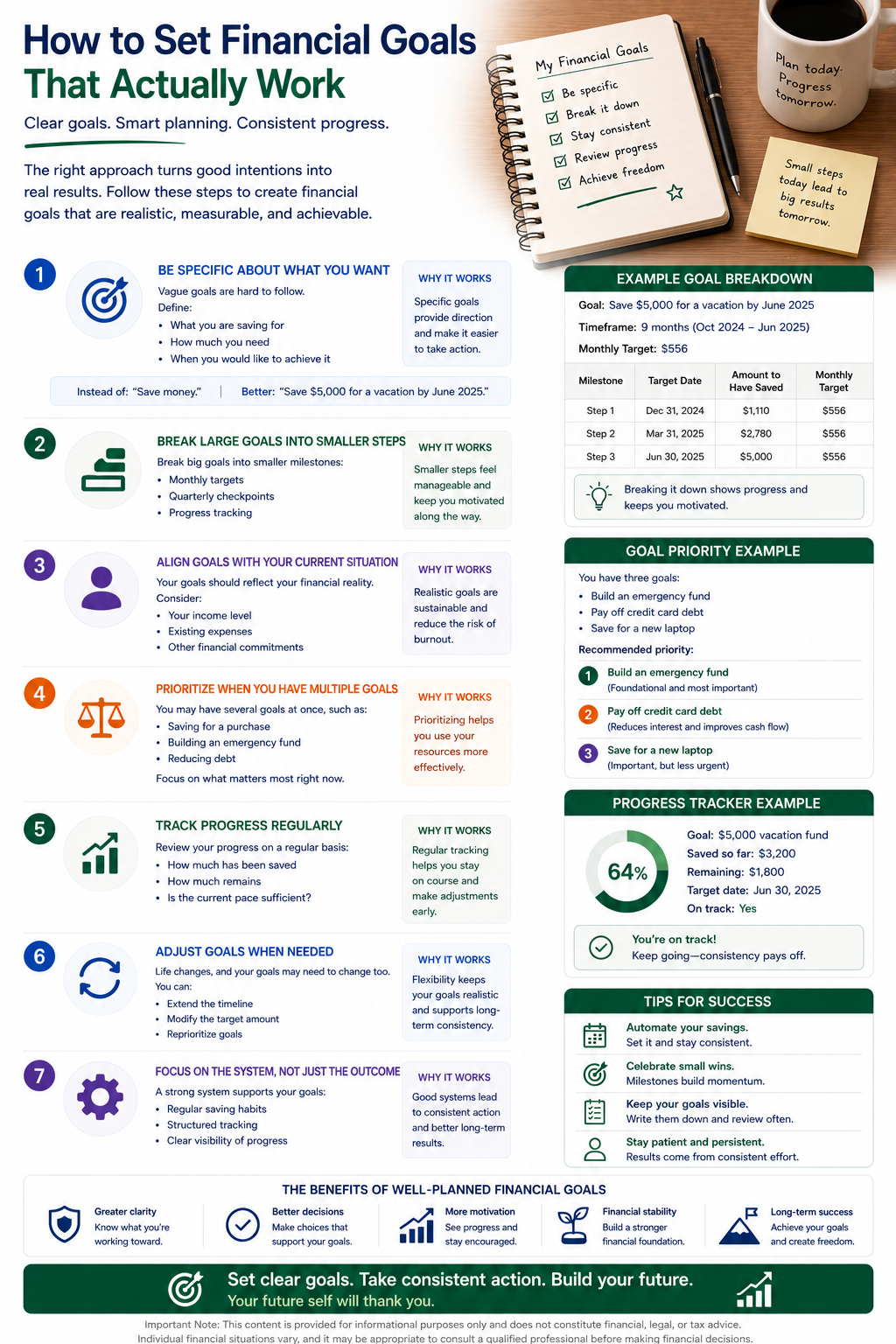
Setting financial goals is a common recommendation, but many people struggle to turn those goals into real progress. The issue is often not motivation, but structure.
This guide explains how to create financial goals that are realistic, measurable, and easier to maintain over time.
1. Be Specific About What You Want
Vague goals such as “save more money” are difficult to follow.
Instead, define:
- What you are saving for
- How much you need
- When you would like to achieve it
For example, instead of “save money,” a more structured goal would be saving a specific amount for a defined purpose within a certain timeframe.
2. Break Large Goals Into Smaller Steps
Large financial goals can feel overwhelming.
Breaking them into smaller milestones can make them easier to manage:
- Monthly targets
- Quarterly checkpoints
- Progress tracking
This approach helps maintain momentum and reduces the risk of losing focus.
3. Align Goals With Your Current Situation
A goal should reflect your current financial reality.
Consider:
- Your income level
- Existing expenses
- Other financial commitments
Setting goals that are too aggressive can lead to frustration, while realistic goals are more sustainable.
4. Prioritize When You Have Multiple Goals
Many people have more than one financial goal at the same time.
Examples include:
- Saving for a purchase
- Building an emergency fund
- Reducing expenses
Trying to maximize all goals simultaneously can be difficult. Prioritizing helps allocate resources more effectively.
5. Track Progress Regularly
Tracking progress is essential for staying on course.
You can review:
- How much has been saved
- How much remains
- Whether the current pace is sufficient
This helps you make adjustments early rather than reacting too late.
6. Adjust Goals When Needed
Financial situations change over time.
Adjusting a goal does not mean failure — it often reflects a more accurate understanding of your situation.
Changes may include:
- Extending the timeline
- Modifying the target amount
- Reprioritizing goals
Flexibility helps maintain long-term consistency.
7. Focus on the System, Not Just the Outcome
A strong system supports your goals.
This may include:
- Regular saving habits
- Structured tracking
- Clear visibility of progress
Goals become more achievable when supported by a consistent process.
Final Thoughts
Financial goals are most effective when they are clear, structured, and adaptable. By focusing on realistic planning and consistent progress, you can build a system that supports long-term financial stability.