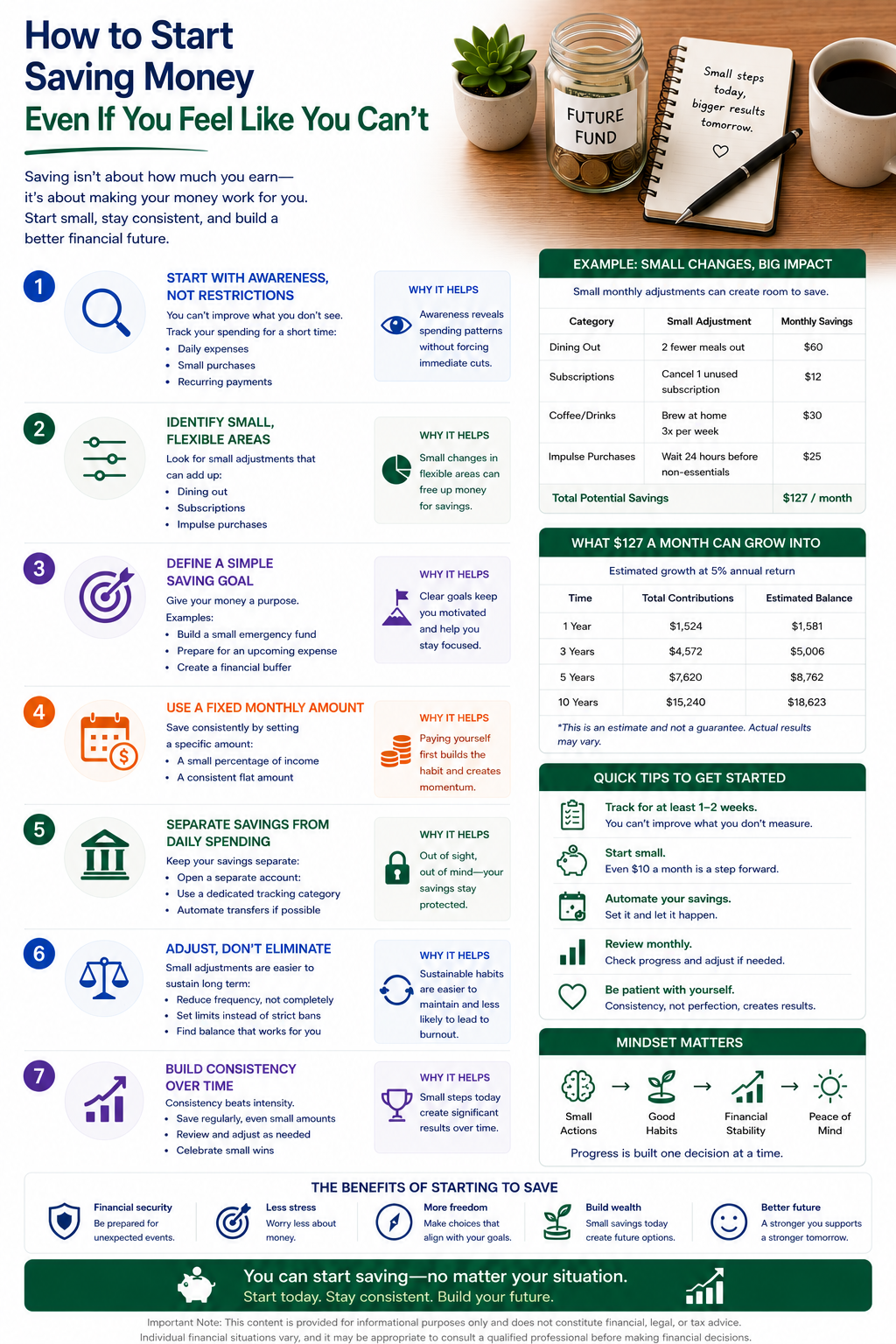
Saving money can feel difficult, especially when your monthly income already seems fully committed. However, saving is not only about how much you earn — it is often about how you structure and manage what you already have.
This guide outlines a practical way to start saving, even in situations where it may not seem possible at first.
1. Start With Awareness, Not Restrictions
Many people approach saving by trying to immediately cut spending. While that can help, it is often more effective to begin with awareness.
Track your spending for a short period of time:
- Daily expenses
- Small purchases
- Recurring payments
This step helps identify patterns without forcing immediate changes.
2. Identify Small, Flexible Areas
Instead of focusing on major expenses right away, look for smaller, more flexible categories:
- Dining out
- Subscriptions
- Impulse purchases
Even small adjustments in these areas can create room for saving without significantly affecting your lifestyle.
3. Define a Simple Saving Goal
Saving becomes easier when it has a clear purpose.
Examples:
- Building a small emergency fund
- Preparing for an upcoming expense
- Creating a financial buffer
The goal does not need to be large. Starting small can help build consistency.
4. Use a Fixed Monthly Amount
Rather than saving “what is left,” consider setting a fixed amount.
This could be:
- A small percentage of your income
- A consistent flat amount
Even a modest, regular contribution can build momentum over time.
5. Separate Savings From Daily Spending
Keeping savings separate from your everyday spending can reduce the temptation to use it.
Options include:
- A separate account
- A dedicated tracking system
- A structured budgeting method
The goal is to make saving feel like a distinct action.
6. Adjust, Don’t Eliminate
Saving does not always require eliminating spending entirely.
In many cases, adjusting habits slightly can be more sustainable:
- Reducing frequency instead of cutting completely
- Setting limits rather than strict bans
This approach is often easier to maintain long term.
7. Build Consistency Over Time
Saving is less about large one-time actions and more about consistency.
Regular, smaller contributions can become significant over time. The key is to maintain a system that fits your situation and can adapt when needed.
Final Thoughts
Starting to save money is often more achievable than it appears. With a structured approach and realistic expectations, even small steps can create measurable progress over time.