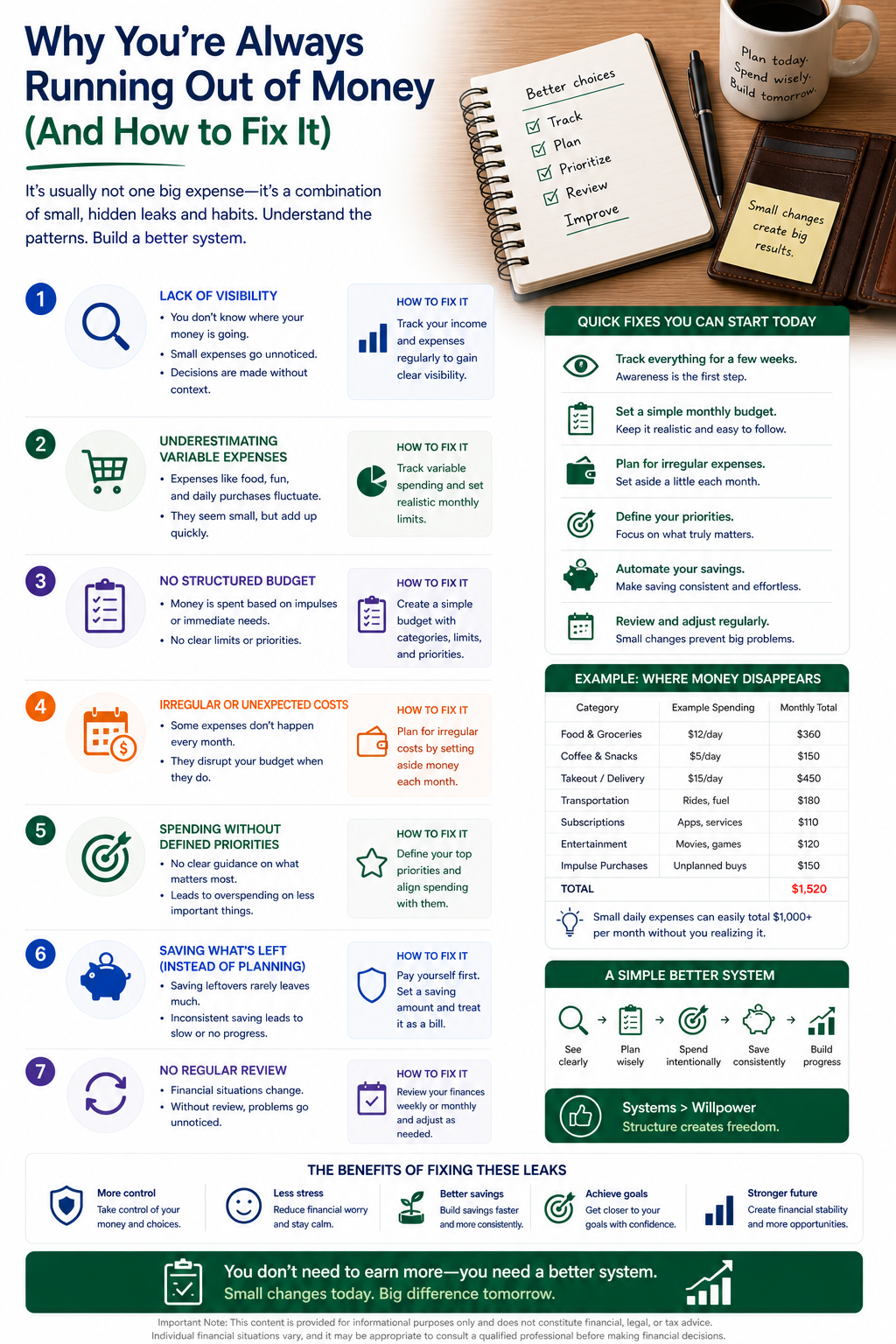
Running out of money before the end of the month is a common experience. In many cases, it is not caused by a single large expense, but by a combination of smaller, less visible factors.
Understanding these patterns is the first step toward improving your financial situation.
1. Lack of Visibility
One of the most common reasons is simply not knowing where your money is going.
Without a clear overview:
- Small expenses go unnoticed
- Spending patterns remain hidden
- Decisions are made without context
Improving visibility through tracking can often reveal issues quickly.
2. Underestimating Variable Expenses
Fixed costs are usually predictable, but variable expenses can fluctuate significantly.
Examples include:
- Food and groceries
- Entertainment
- Daily purchases
These categories may seem manageable individually but can add up over time.
3. No Structured Budget
Without a structured plan, money tends to be spent based on immediate needs or impulses.
A simple budget provides:
- Spending limits
- Clear priorities
- Better control over decisions
Even a basic structure can make a noticeable difference.
4. Irregular or Unexpected Costs
Certain expenses do not occur every month but still affect your overall finances.
These may include:
- Annual subscriptions
- Maintenance costs
- Occasional large purchases
If these are not accounted for, they can disrupt your monthly balance.
5. Spending Without Defined Priorities
When there are no clear priorities, it becomes harder to decide how to allocate money.
This can lead to:
- Overspending in less important areas
- Insufficient funds for essential needs
- Difficulty reaching financial goals
Defining priorities helps guide daily decisions.
6. Saving What’s Left (Instead of Planning)
A common approach is to save whatever remains at the end of the month.
However, this often results in little or no savings.
A more structured method is to:
- Set a planned saving amount
- Treat it as a regular expense
- Adjust spending around it
This approach can improve consistency.
7. No Regular Review
Financial situations change, but without regular review, these changes may go unnoticed.
Reviewing your finances periodically helps:
- Identify issues early
- Adjust spending patterns
- Maintain better control
Even a short weekly check can be effective.
Final Thoughts
Running out of money is often the result of multiple small factors rather than a single major issue. By improving awareness, creating structure, and reviewing your finances regularly, it is possible to build a more stable and predictable system over time.