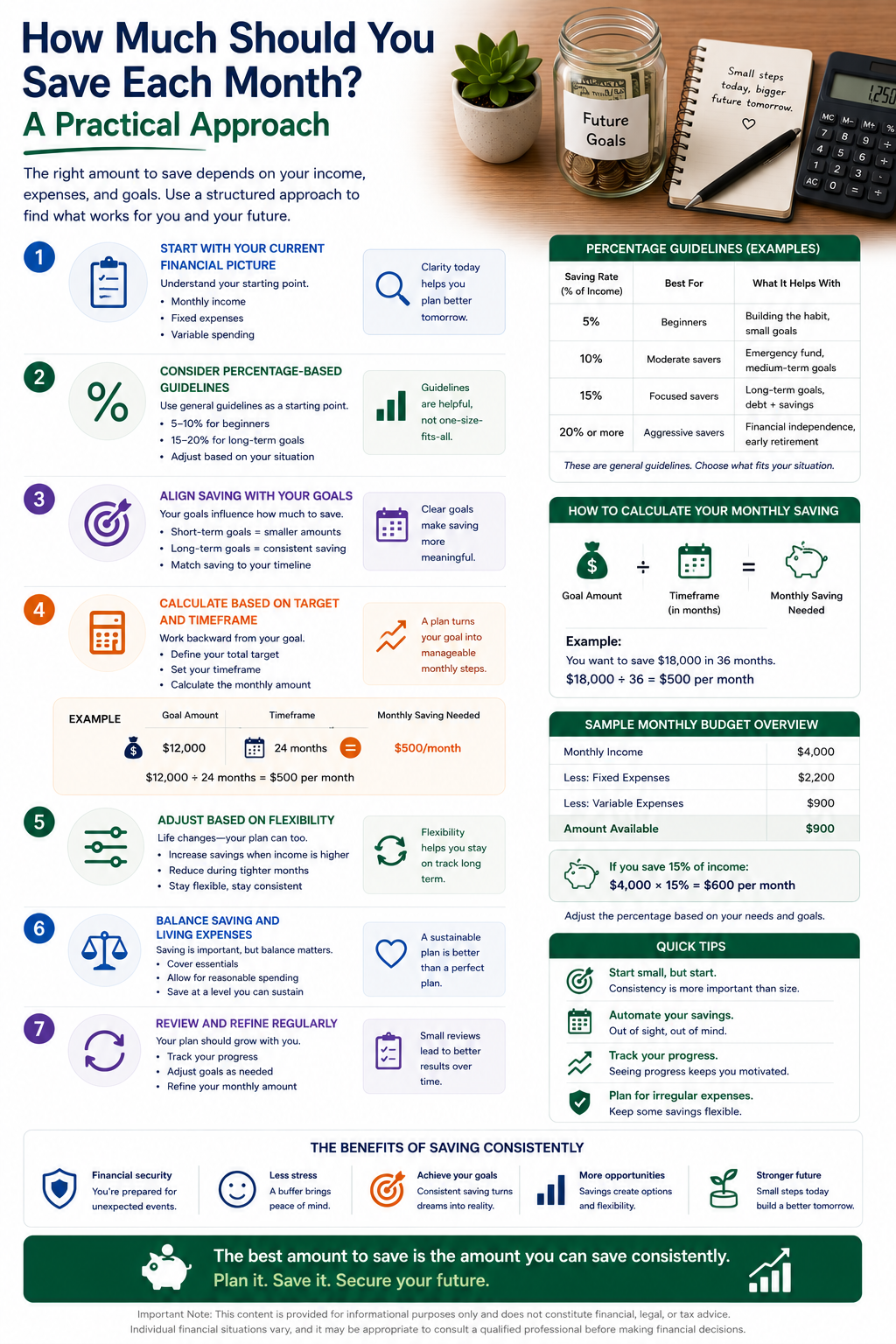
One of the most common questions in personal finance is how much you should save each month. The answer is not the same for everyone, as it depends on your income, expenses, and financial goals.
However, there are practical ways to estimate a reasonable saving amount that fits your situation.
1. Start With Your Current Financial Picture
Before deciding how much to save, it is important to understand your current situation.
Review:
- Monthly income
- Fixed expenses
- Variable spending
This creates a baseline that helps you determine what is realistically possible.
2. Consider Percentage-Based Guidelines
Some people use general guidelines, such as saving a percentage of their income.
Examples may include:
- A small percentage for beginners
- A higher percentage for long-term planning
These guidelines can provide a starting point, but they should be adjusted based on your individual circumstances.
3. Align Saving With Your Goals
The amount you save should reflect your financial goals.
For example:
- Short-term goals may require smaller, more immediate contributions
- Long-term goals may require consistent, ongoing saving
Understanding your timeline can help you estimate how much you need to set aside each month.
4. Calculate Based on Target and Timeframe
A practical approach is to work backward from your goal.
Define:
- The total amount you want to save
- The timeframe in which you want to achieve it
Then estimate a monthly contribution that would support that goal.
This method creates a clearer connection between your actions and your objectives.
5. Adjust Based on Flexibility
Not every month will be the same.
You may need to:
- Increase savings during higher-income periods
- Reduce contributions during tighter months
Flexibility helps maintain consistency over time.
6. Balance Saving and Living Expenses
Saving is important, but it should not create unnecessary financial pressure.
A balanced approach considers:
- Essential expenses
- Reasonable discretionary spending
- Sustainable saving levels
The goal is to build a system you can maintain.
7. Review and Refine Regularly
Your saving strategy should evolve with your situation.
Regular reviews allow you to:
- Track progress
- Adjust targets
- Improve accuracy
Small adjustments over time can lead to better long-term outcomes.
Final Thoughts
There is no single correct amount to save each month. The most effective approach is one that reflects your goals, fits your current situation, and can be maintained consistently over time.