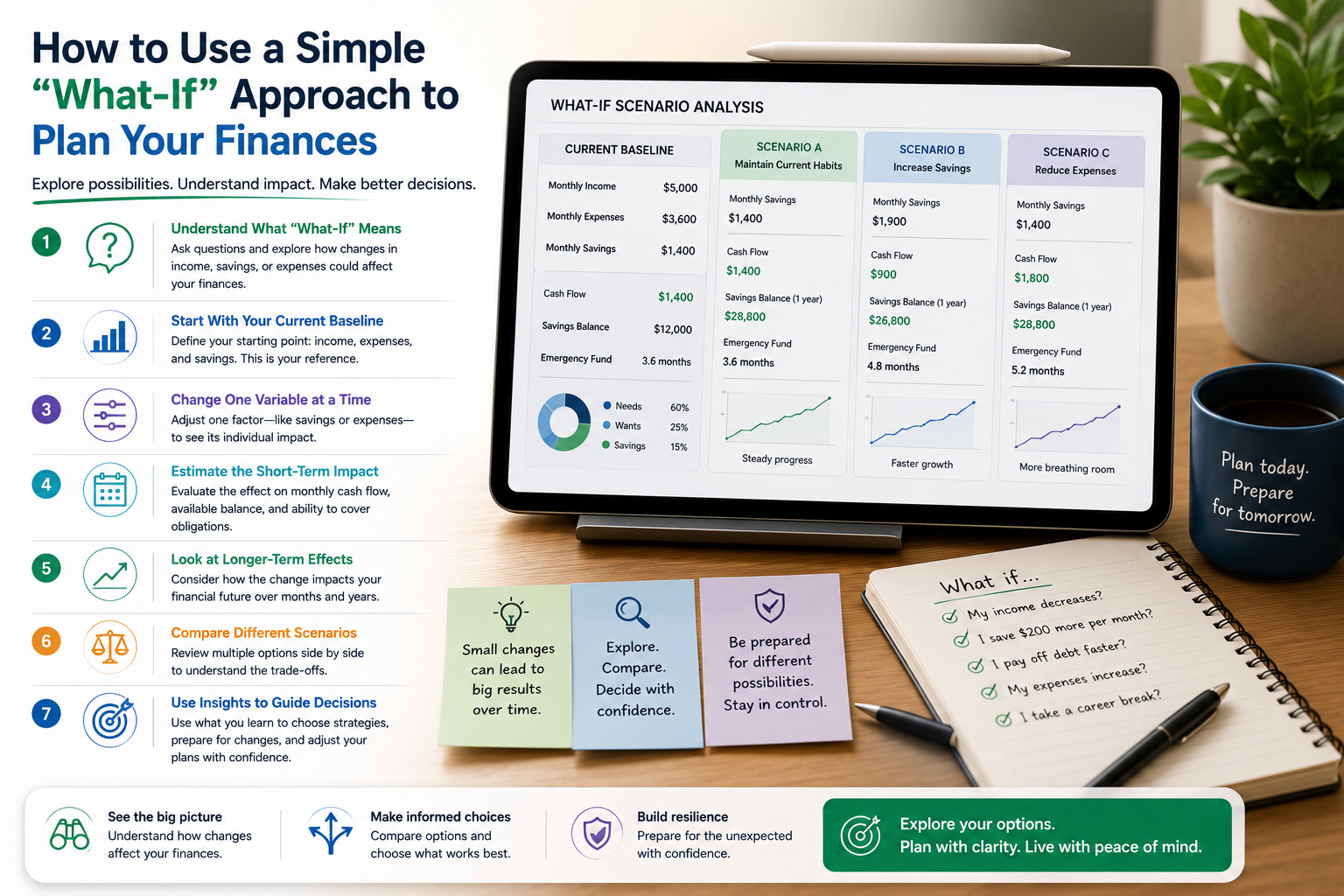
Financial planning often focuses on current numbers, but many decisions depend on how your situation might change over time. A simple “what-if” approach can help you explore different scenarios and understand potential outcomes.
This method does not require complex tools — just a structured way of thinking about possibilities.
1. Understand What “What-If” Means
A “what-if” approach involves asking questions such as:
- What if my income changes?
- What if I increase my savings?
- What if my expenses go up?
These questions help you explore how different factors may affect your finances.
2. Start With Your Current Baseline
Before exploring scenarios, define your current situation:
- Monthly income
- Regular expenses
- Current savings
This serves as the reference point for any changes you want to test.
3. Change One Variable at a Time
To keep things clear, adjust one factor at a time.
For example:
- Increase savings by a fixed amount
- Reduce a spending category
- Shift a payment timeline
This helps you understand the impact of each change individually.
4. Estimate the Short-Term Impact
Consider how a change affects your finances in the near term.
You can evaluate:
- Monthly cash flow
- Available balance
- Ability to meet obligations
This helps identify whether a change is manageable.
5. Look at Longer-Term Effects
Some changes have a greater impact over time.
For example:
- Consistent savings adjustments
- Gradual changes in spending habits
Looking at longer periods can reveal patterns that are not immediately visible.
6. Compare Different Scenarios
You can explore multiple options:
- Scenario A: Maintain current habits
- Scenario B: Increase savings
- Scenario C: Reduce expenses
Comparing these scenarios helps you make more informed decisions.
7. Use Insights to Guide Decisions
The goal of a “what-if” approach is not to predict the future perfectly, but to improve decision-making.
By understanding possible outcomes, you can:
- Choose more realistic strategies
- Prepare for changes
- Adjust your plans with more confidence
Final Thoughts
A simple “what-if” approach can make financial planning more flexible and informative. By exploring different scenarios, you can better understand the potential impact of your decisions and build a more adaptable system.