Managing your finances is not just about having a good plan — it is about maintaining that plan over time. Many people start with strong intentions, but consistency often becomes the biggest challenge.
This guide focuses on how to build a system that helps you stay consistent without requiring constant effort.
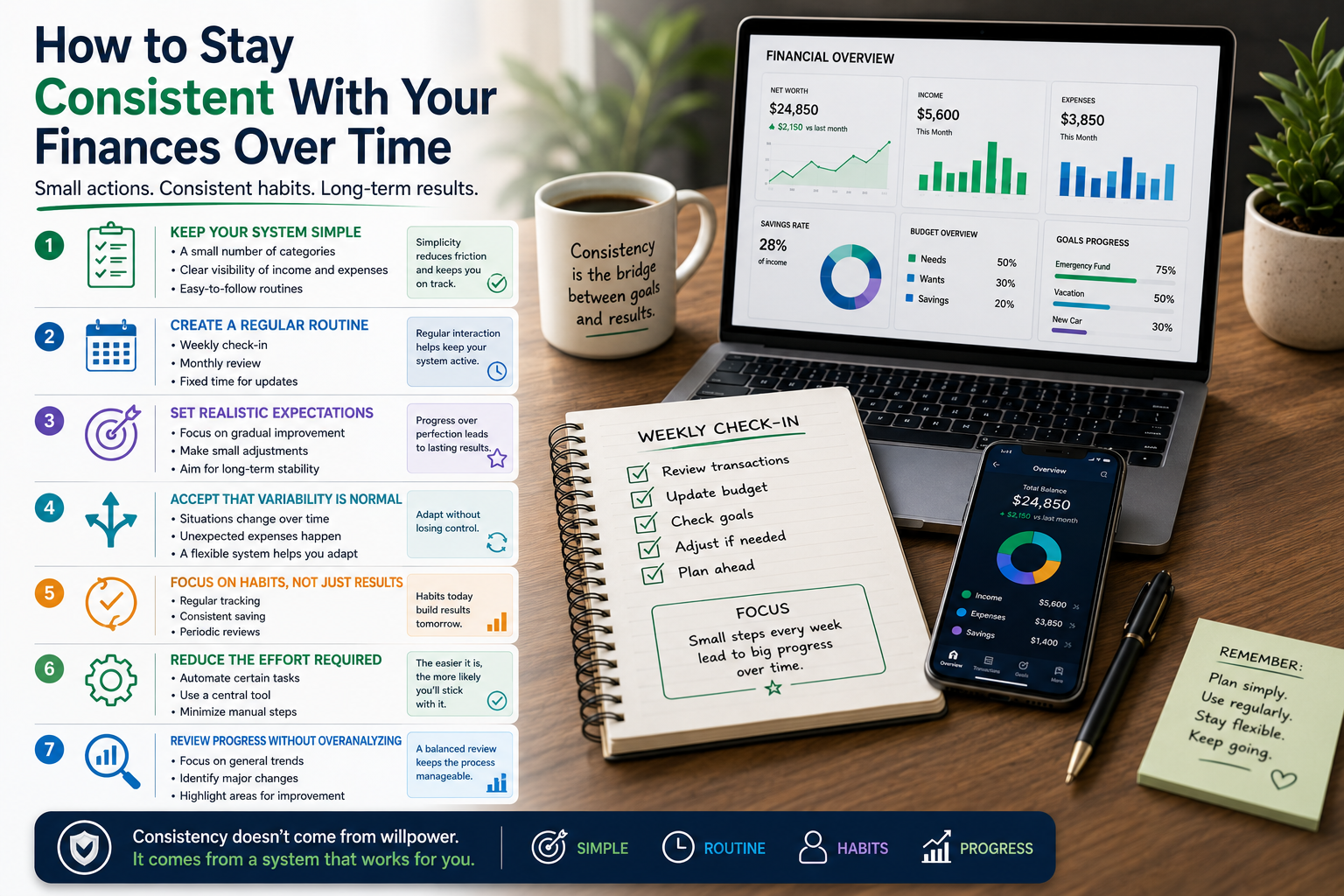
1. Keep Your System Simple
Complex systems can be difficult to maintain.
A simpler approach may include:
- A small number of categories
- Clear visibility of income and expenses
- Easy-to-follow routines
Simplicity reduces friction and makes it easier to stay on track.
2. Create a Regular Routine
Consistency improves when actions become part of a routine.
You can establish:
- A weekly check-in
- A monthly review
- A fixed time for updates
Regular interaction helps keep your system active.
3. Set Realistic Expectations
Unrealistic expectations can lead to frustration.
Instead of aiming for perfect control, focus on:
- Gradual improvement
- Small adjustments
- Long-term stability
This mindset supports sustained progress.
4. Accept That Variability Is Normal
Financial situations change over time.
Unexpected expenses, income changes, or shifting priorities are part of the process.
A flexible system allows you to adapt without losing control.
5. Focus on Habits, Not Just Results
Results may take time, but habits can be developed immediately.
Examples include:
- Regular tracking
- Consistent saving
- Periodic reviews
Habits create a foundation for long-term outcomes.
6. Reduce the Effort Required
The easier your system is to use, the more likely you are to maintain it.
You can:
- Automate certain tasks
- Use a central tool
- Minimize manual steps
Reducing effort supports consistency.
7. Review Progress Without Overanalyzing
Regular reviews are important, but excessive analysis can become overwhelming.
Focus on:
- General trends
- Major changes
- Areas for improvement
A balanced approach keeps the process manageable.
Final Thoughts
Consistency in financial management comes from simple systems, realistic expectations, and regular habits. By reducing complexity and maintaining a steady routine, you can build a system that works over time.