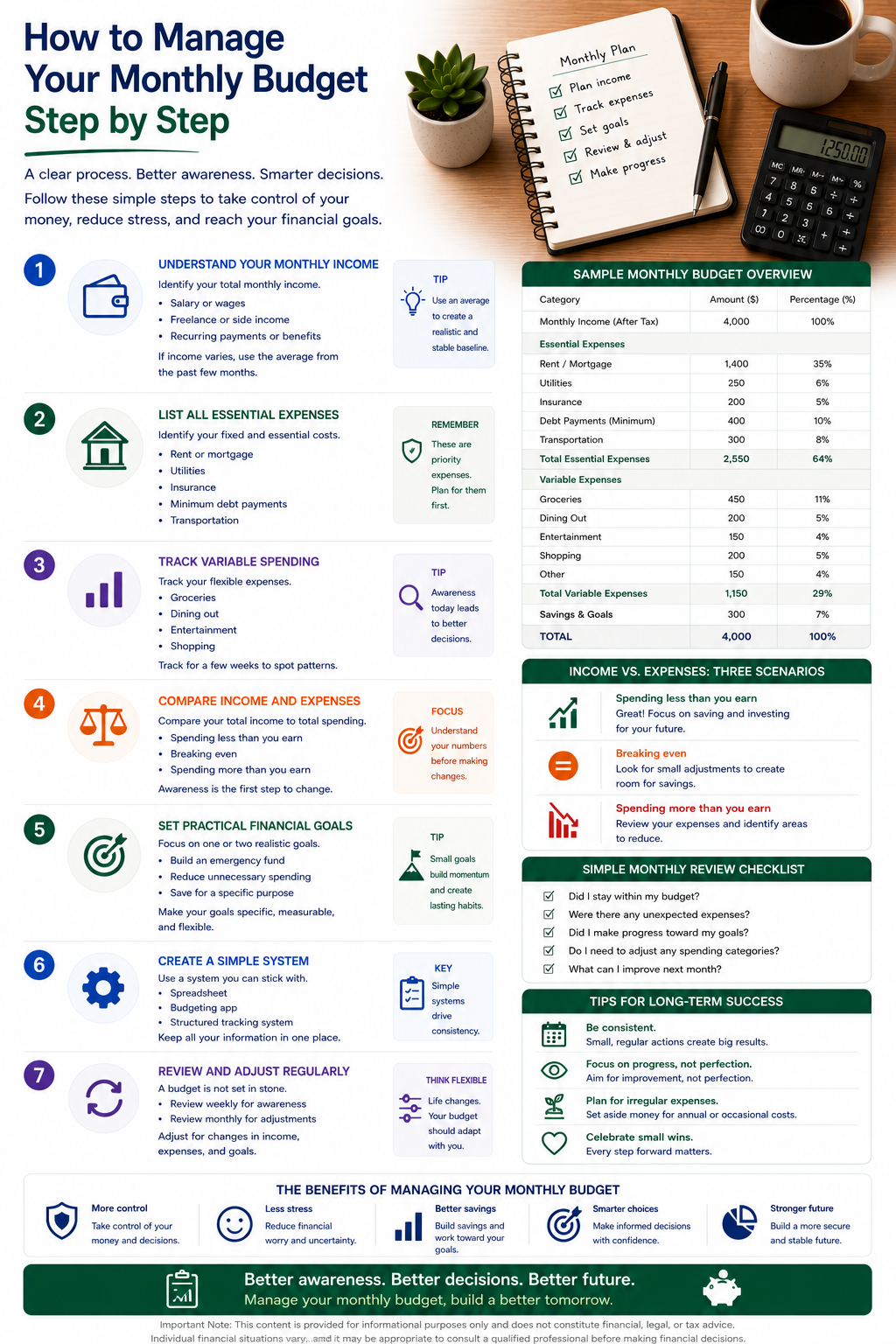
Managing your monthly budget doesn’t require complex tools or financial expertise. What it does require is consistency, awareness, and a structured approach that helps you understand where your money is going.
This guide provides a simple, step-by-step framework you can adapt to your own situation.
1. Understand Your Monthly Income
Start by identifying your total monthly income. This includes:
- Salary or wages
- Freelance or side income
- Any recurring payments or benefits
If your income varies, consider using an average based on the past few months. This helps create a more realistic baseline.
2. List All Essential Expenses
Next, identify your fixed and essential expenses. These typically include:
- Rent or mortgage
- Utilities
- Insurance
- Minimum debt payments
- Transportation
These are costs that are usually difficult to avoid and should be prioritized in your planning.
3. Track Variable Spending
Variable expenses often have the biggest impact on your budget because they are less predictable.
Examples include:
- Groceries
- Dining out
- Entertainment
- Shopping
Tracking these categories for even a few weeks can reveal patterns that are otherwise easy to overlook.
4. Compare Income and Expenses
Once you have a clear picture, compare your total income to your total spending.
There are three possible outcomes:
- You are spending less than you earn
- You are breaking even
- You are spending more than you earn
Each scenario requires a different adjustment, but awareness is the first step toward making informed decisions.
5. Set Practical Financial Goals
Instead of trying to optimize everything at once, focus on one or two realistic goals.
These might include:
- Building an emergency fund
- Reducing unnecessary spending
- Saving for a specific purpose
Goals work best when they are specific and measurable, but also flexible enough to adjust as your situation changes.
6. Create a Simple System
Consistency is more important than complexity.
You can use:
- A spreadsheet
- A budgeting app
- A structured tracking system
The key is to have a single place where your income, expenses, and goals are clearly visible.
7. Review and Adjust Regularly
A budget is not something you set once and forget.
Review it regularly:
- Weekly for awareness
- Monthly for adjustments
Unexpected expenses and changes in income are normal. A flexible system helps you respond without losing control.