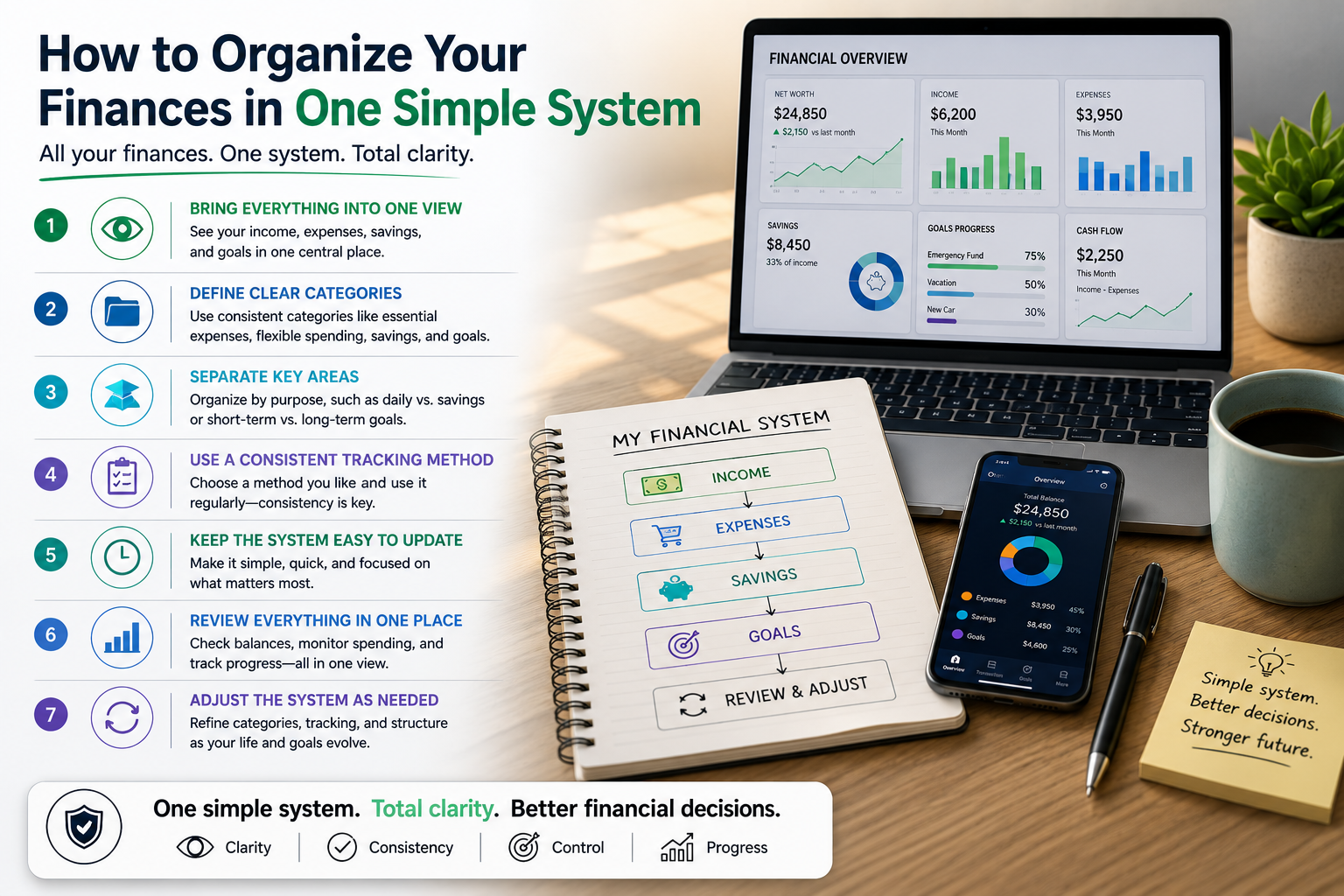
Managing finances across multiple tools, accounts, or methods can make it difficult to stay organized. A more effective approach is to bring everything into a single, structured system that is easy to review and maintain.
This guide explains how to organize your finances in a clear and practical way.
1. Bring Everything Into One View
The first step is to create a central place where you can see your financial situation.
This should include:
- Income
- Expenses
- Savings
- Financial goals
Having everything in one place reduces confusion and improves visibility.
2. Define Clear Categories
Organizing your finances becomes easier when you use consistent categories.
A simple structure might include:
- Essential expenses
- Flexible spending
- Savings
- Goals
Clear categories make it easier to track and review your finances.
3. Separate Key Areas
While everything should be visible in one system, it can still be helpful to separate functions logically.
For example:
- Daily spending vs savings
- Short-term vs long-term goals
This separation adds clarity without increasing complexity.
4. Use a Consistent Tracking Method
Consistency is more important than the specific tool you use.
Options may include:
- A spreadsheet
- A financial app
- A structured tracking system
The key is to use the same method regularly.
5. Keep the System Easy to Update
An effective system should be quick to maintain.
You can:
- Limit the number of steps required
- Use simple inputs
- Avoid unnecessary detail
This reduces the effort needed to stay organized.
6. Review Everything in One Place
Regular reviews are more effective when all information is centralized.
During a review, you can:
- Check current balances
- Monitor spending
- Evaluate progress toward goals
This provides a complete picture of your finances.
7. Adjust the System as Needed
Your financial system should evolve over time.
You may need to:
- Add or remove categories
- Adjust how you track data
- Refine your structure
Flexibility helps maintain long-term usability.
Final Thoughts
Organizing your finances into one simple system can improve clarity, reduce effort, and support better decision-making. A well-structured system does not need to be complex to be effective.