Creating a monthly budget is relatively easy. Sticking to it over time is where most people face challenges. The difference often comes down to how realistic and flexible the budget is.
This guide explains how to create a budget that is practical and easier to maintain.
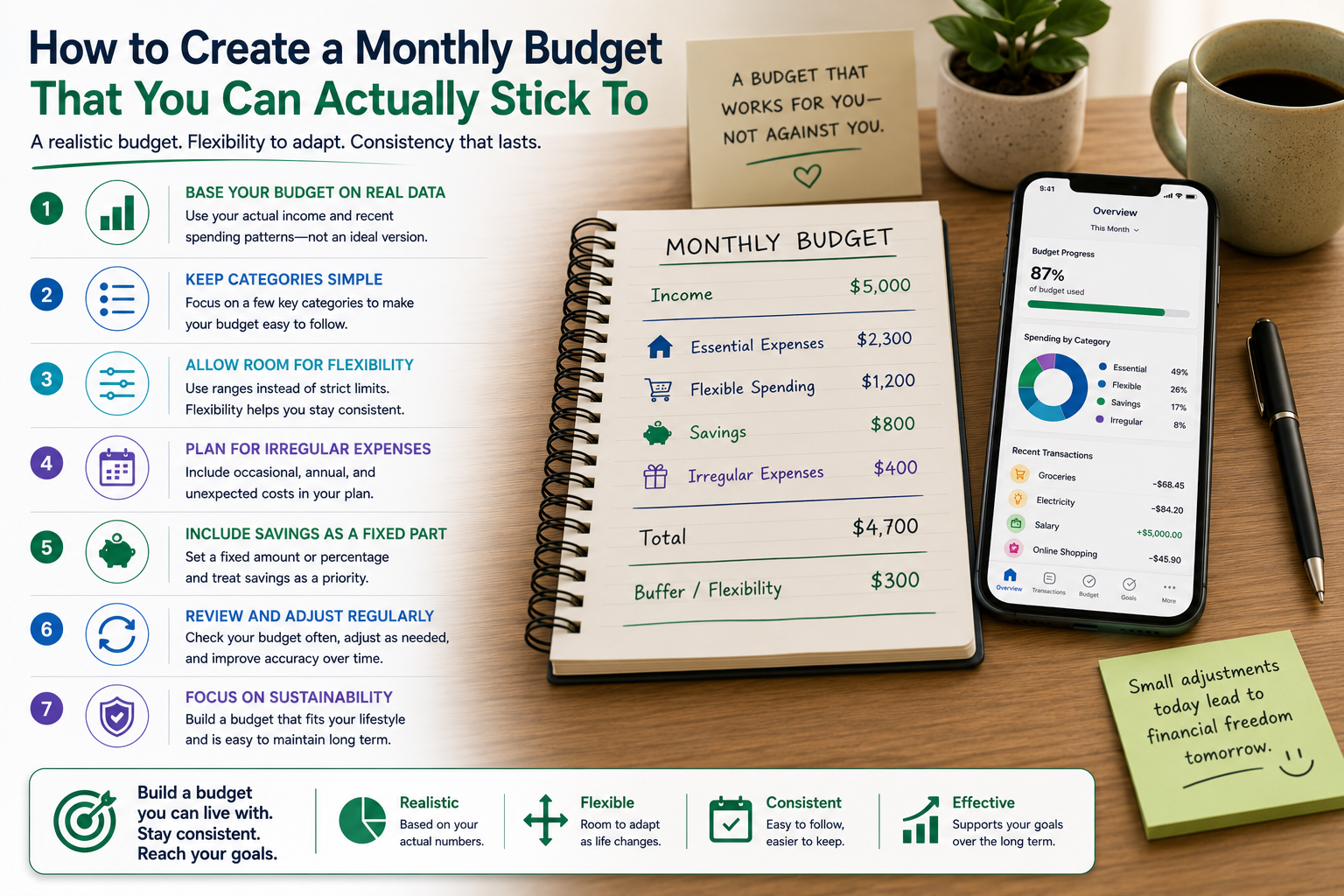
1. Base Your Budget on Real Data
A budget should reflect your actual financial behavior, not an ideal version of it.
Start with:
- Your real income
- Your recent spending patterns
Using real data helps avoid setting unrealistic expectations.
2. Keep Categories Simple
Too many categories can make a budget difficult to follow.
A simpler structure may include:
- Essential expenses
- Flexible spending
- Savings
This makes the system easier to manage on a daily basis.
3. Allow Room for Flexibility
Strict budgets often fail because they leave no room for variation.
Instead of setting exact limits for everything, consider:
- Approximate ranges
- Adjustable spending categories
Flexibility helps maintain consistency.
4. Plan for Irregular Expenses
Many budgets fail because they only include predictable costs.
Consider adding space for:
- Occasional purchases
- Annual payments
- Unexpected expenses
Planning for these can prevent disruptions.
5. Include Savings as a Fixed Part
Rather than saving what remains, include savings in your budget from the start.
You can:
- Set a fixed amount
- Allocate a percentage of income
Treating savings as a regular component improves consistency.
6. Review and Adjust Regularly
A budget should evolve over time.
Regular reviews help you:
- Identify what is working
- Adjust categories or limits
- Improve accuracy
Even small adjustments can make a budget more effective.
7. Focus on Sustainability
A budget is only useful if you can follow it.
A sustainable budget:
- Fits your lifestyle
- Allows reasonable flexibility
- Does not require constant effort
Long-term consistency is more important than short-term precision.
Final Thoughts
A monthly budget works best when it is realistic, flexible, and easy to maintain. By building your budget around your actual habits and adjusting it over time, you can create a system that supports consistent financial management.