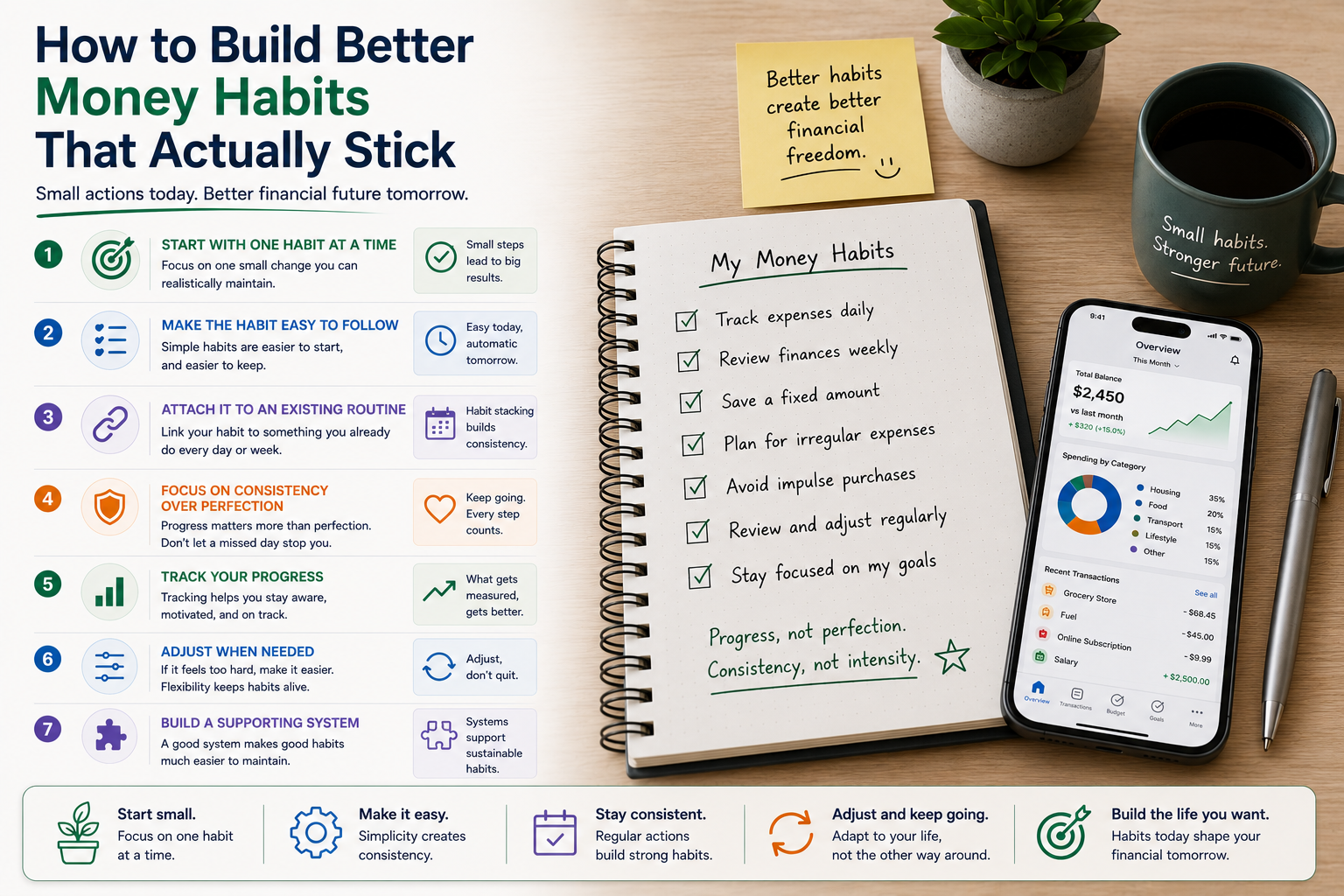
Managing money effectively is not only about tools or strategies — it is largely about habits. Many financial improvements come from small, repeated actions rather than one-time decisions.
Building better money habits can help create long-term consistency and reduce the need for constant effort.
1. Start With One Habit at a Time
Trying to change too many behaviors at once can make it difficult to maintain progress.
Instead, focus on one habit:
- Tracking expenses daily
- Reviewing finances weekly
- Setting aside a fixed amount regularly
Small changes are often easier to sustain.
2. Make the Habit Easy to Follow
A habit is more likely to stick if it is simple.
You can:
- Reduce the number of steps involved
- Use a familiar tool or system
- Keep the process quick
The easier the habit, the more likely it will become consistent.
3. Attach It to an Existing Routine
Linking a new habit to something you already do can improve consistency.
For example:
- Reviewing expenses after dinner
- Checking finances at the end of the week
This reduces the need to create a completely new routine.
4. Focus on Consistency Over Perfection
It is not necessary to perform a habit perfectly every time.
Missing a day or making a small mistake does not reduce the overall value.
Consistency over time is more important than short-term precision.
5. Track Your Progress
Tracking helps reinforce habits.
You can monitor:
- How often you follow the habit
- Whether it becomes easier over time
Seeing progress can help maintain motivation.
6. Adjust When Needed
If a habit feels difficult to maintain, it may need adjustment.
You can:
- Simplify the process
- Reduce the frequency
- Change the method
Flexibility helps make habits sustainable.
7. Build a Supporting System
Habits work best when supported by a system.
This may include:
- A structured tracking method
- Clear financial goals
- Regular reviews
A system reduces the effort required to maintain habits.
Final Thoughts
Better money habits are built through small, consistent actions over time. By focusing on simplicity, consistency, and adaptability, you can create habits that support long-term financial stability.