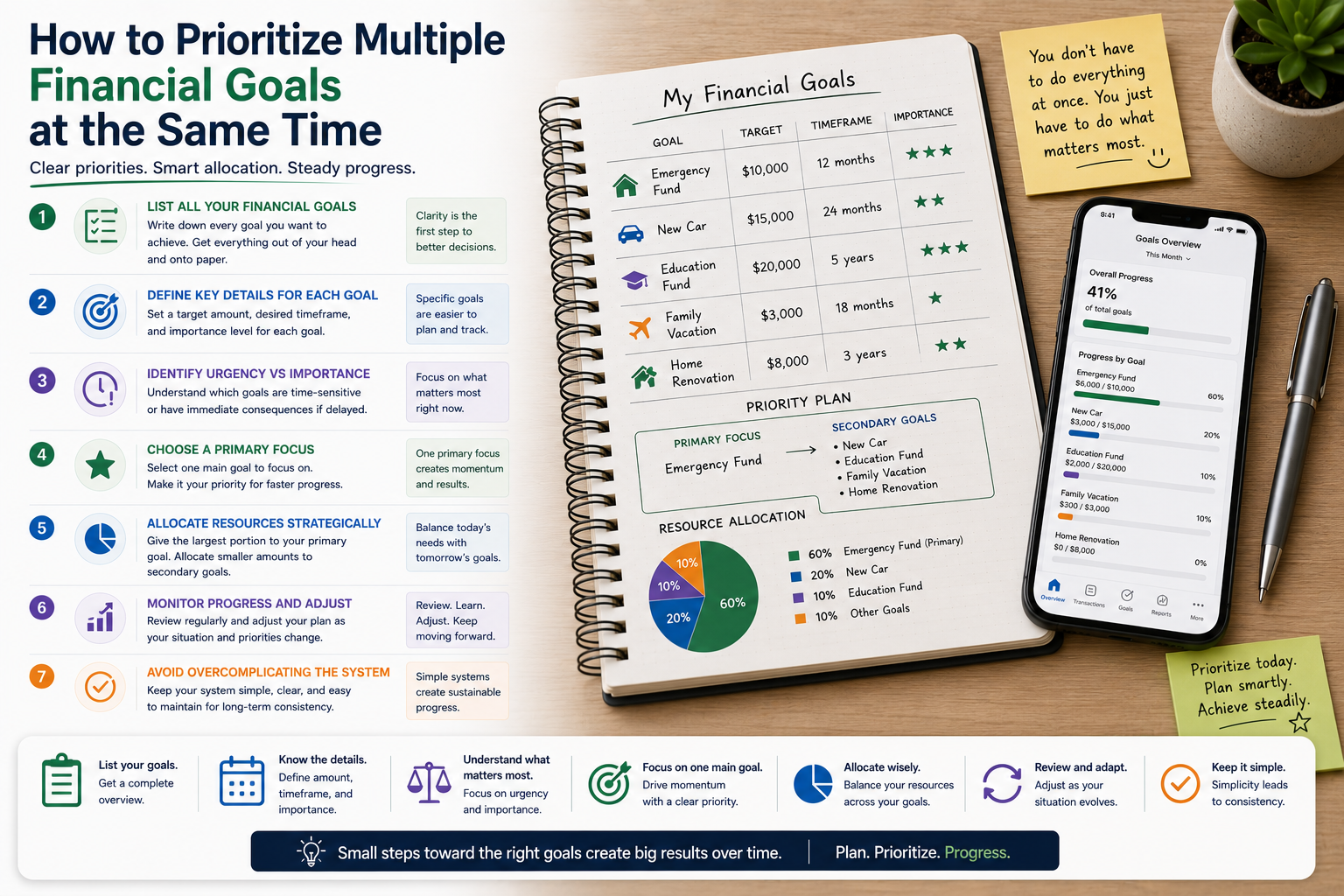
Managing more than one financial goal at once can feel challenging. Many people try to make progress on several goals simultaneously, but without a clear structure, this can lead to slow results or frustration.
A structured approach can help you allocate your resources more effectively and maintain progress over time.
1. List All Your Financial Goals
Start by identifying all the goals you want to work toward.
These might include:
- Building savings
- Preparing for a purchase
- Managing regular expenses
Having everything in one place provides a clearer overview.
2. Define Key Details for Each Goal
For each goal, try to define:
- Target amount
- Desired timeframe
- Level of importance
This helps create a more structured foundation for planning.
3. Identify Urgency vs Importance
Not all goals are equally urgent.
Some goals may have:
- A fixed deadline
- Immediate consequences if delayed
Others may be more flexible.
Understanding this difference can help you decide where to focus first.
4. Choose a Primary Focus
Trying to prioritize everything at once can reduce effectiveness.
Instead, consider:
- Selecting one primary goal
- Allocating most resources to it
- Maintaining minimal progress on others
This approach can help create visible results.
5. Allocate Resources Strategically
Once priorities are defined, decide how to distribute your resources.
You can:
- Assign a larger portion to the main goal
- Allocate smaller amounts to secondary goals
This creates a balanced structure without losing focus.
6. Monitor Progress and Adjust
As you make progress, your priorities may change.
Regularly review:
- Progress toward each goal
- Whether your current allocation is effective
- If adjustments are needed
Flexibility helps maintain long-term consistency.
7. Avoid Overcomplicating the System
A simple structure is easier to maintain than a complex one.
Focus on:
- Clear priorities
- Consistent contributions
- Regular reviews
This can help you stay on track without unnecessary complexity.
Final Thoughts
Managing multiple financial goals is not about doing everything at once, but about making structured decisions. By prioritizing effectively and adjusting over time, you can create a system that supports steady and sustainable progress.