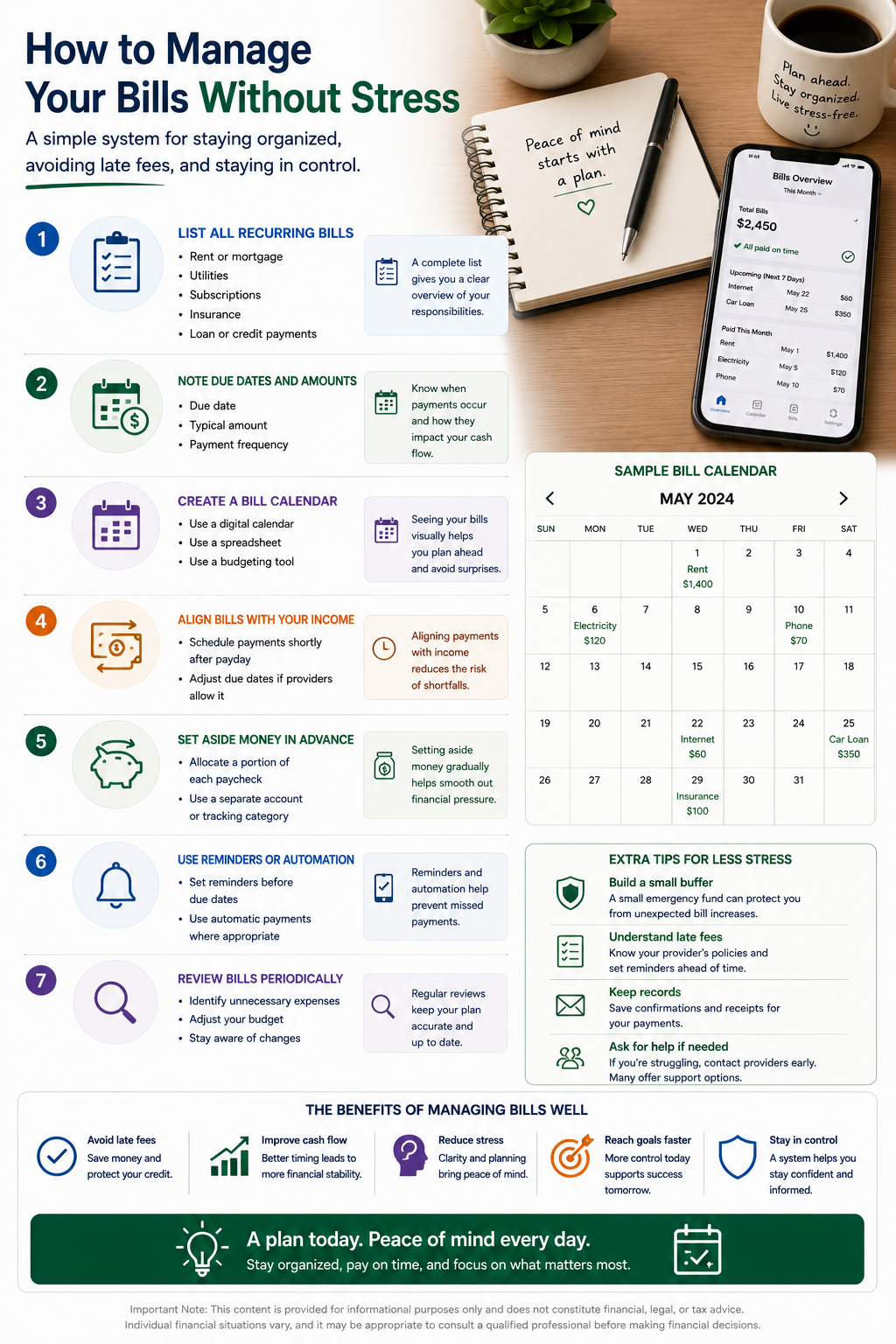
Managing monthly bills can feel overwhelming, especially when multiple payments are due at different times. However, with a structured approach, it is possible to handle bills more predictably and with less stress.
This guide outlines a simple system to help you stay organized and maintain control.
1. List All Recurring Bills
Start by identifying all of your regular financial obligations.
These may include:
- Rent or mortgage
- Utilities
- Subscriptions
- Insurance
- Loan or credit payments
Having a complete list provides a clear overview of your responsibilities.
2. Note Due Dates and Amounts
For each bill, record:
- Due date
- Typical amount
- Payment frequency
This helps you understand when payments occur and how they affect your monthly cash flow.
3. Create a Bill Calendar
Organizing your bills visually can make a significant difference.
You can use:
- A digital calendar
- A spreadsheet
- A budgeting tool
A bill calendar allows you to see upcoming payments and plan ahead.
4. Align Bills With Your Income
If possible, align your payments with when you receive income.
For example:
- Schedule payments shortly after payday
- Adjust due dates if your providers allow it
This can reduce the risk of running short on funds at critical times.
5. Set Aside Money in Advance
Instead of paying bills only when they are due, consider setting aside money gradually.
You can:
- Allocate a portion of each paycheck
- Use a separate account or tracking category
This approach can help smooth out financial pressure.
6. Use Reminders or Automation
Missed payments are often the result of timing, not intent.
To reduce this risk:
- Set reminders before due dates
- Use automatic payments where appropriate
Automation can simplify the process, but it should still be monitored regularly.
7. Review Bills Periodically
Bills can change over time, especially subscriptions and variable services.
Regular reviews help you:
- Identify unnecessary expenses
- Adjust your budget
- Stay aware of changes
Even a quick monthly check can be useful
Final Thoughts
Managing bills becomes easier when you have a clear system in place. By organizing payments, planning ahead, and reviewing regularly, you can reduce uncertainty and maintain better financial control.