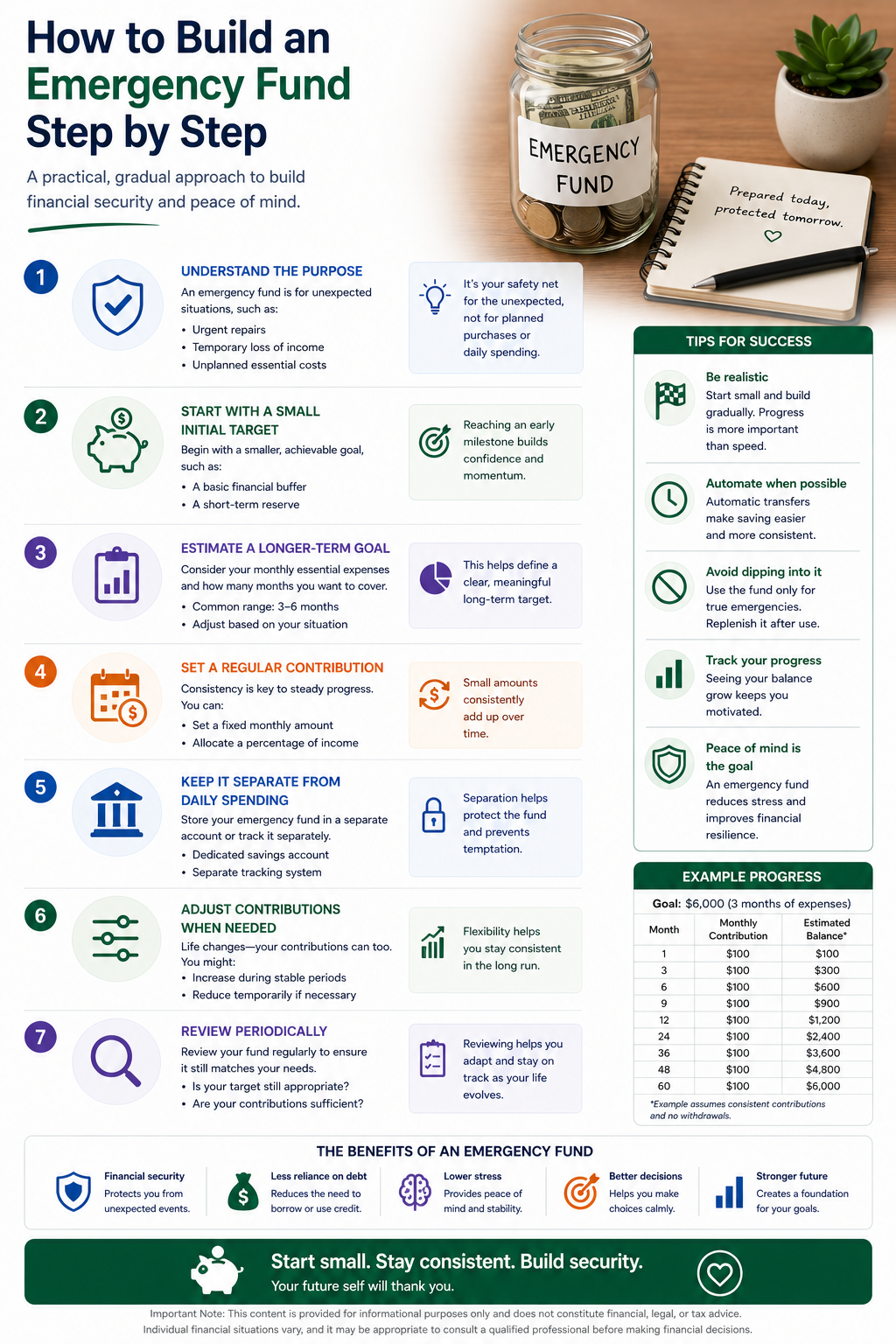
An emergency fund is often considered one of the most important parts of a stable financial system. It provides a buffer for unexpected situations and helps reduce the need to rely on credit or make rushed financial decisions.
Building an emergency fund does not need to happen all at once. A structured, step-by-step approach can make the process more manageable.
1. Understand the Purpose
An emergency fund is intended for unexpected expenses, such as:
- Urgent repairs
- Temporary loss of income
- Unplanned essential costs
It is not typically used for planned purchases or regular spending.
2. Start With a Small Initial Target
Instead of aiming for a large amount immediately, begin with a smaller, more achievable target.
For example:
- A basic financial buffer
- A short-term reserve
Reaching an initial milestone can help build momentum.
3. Estimate a Longer-Term Goal
Over time, you may want to build a larger reserve.
A common approach is to consider:
- Monthly essential expenses
- The number of months you would want to cover
This helps define a more structured long-term target.
4. Set a Regular Contribution
Consistency plays a key role in building an emergency fund.
You can:
- Set a fixed monthly amount
- Allocate a percentage of income
Even smaller contributions can add up over time when applied regularly.
5. Keep It Separate From Daily Spending
An emergency fund is easier to maintain when it is clearly separated from everyday finances.
Options include:
- A dedicated account
- A separate tracking system
This reduces the likelihood of using the funds for non-emergency purposes.
6. Adjust Contributions When Needed
Financial situations change, and your contributions may need to change as well.
You might:
- Increase contributions during stable periods
- Reduce them temporarily if necessary
Flexibility helps maintain consistency over the long term.
7. Review Periodically
Reviewing your emergency fund periodically helps ensure it still matches your needs.
You can evaluate:
- Whether your target amount is still appropriate
- Whether your current contributions are sufficient
Adjustments can be made as your situation evolves.
Final Thoughts
Building an emergency fund is a gradual process that benefits from consistency and realistic planning. Even small, regular contributions can create a meaningful financial buffer over time.