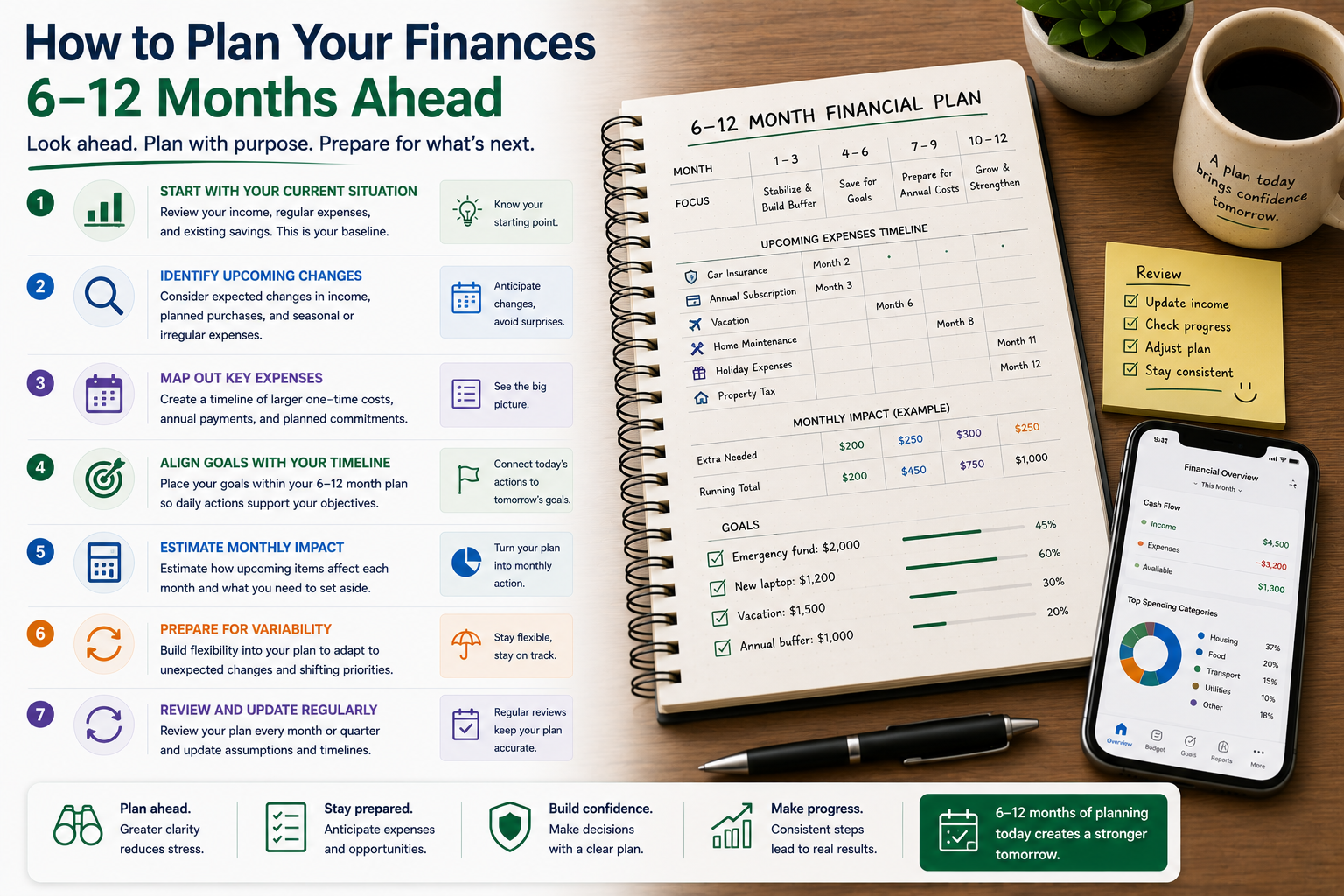
Planning your finances beyond the current month can provide a clearer sense of direction and help reduce uncertainty. While short-term budgeting focuses on immediate expenses, longer-term planning helps you prepare for upcoming changes and goals.
This guide outlines a simple approach to planning your finances over the next 6 to 12 months.
1. Start With Your Current Situation
Begin by reviewing your current financial position:
- Monthly income
- Regular expenses
- Existing savings
This provides a foundation for projecting future changes.
2. Identify Upcoming Changes
Over a 6–12 month period, financial situations often shift.
Consider:
- Expected changes in income
- Planned purchases
- Seasonal or irregular expenses
Identifying these in advance can help you avoid surprises.
3. Map Out Key Expenses
Create a rough timeline of upcoming expenses.
This may include:
- Larger one-time costs
- Annual payments
- Planned financial commitments
Seeing these on a timeline can make planning more manageable.
4. Align Goals With Your Timeline
If you have financial goals, place them within your 6–12 month plan.
For example:
- Saving for a specific purchase
- Building a financial buffer
- Preparing for a known expense
This helps connect your daily actions with longer-term objectives.
5. Estimate Monthly Impact
Once you have a timeline, estimate how it affects your monthly finances.
You can consider:
- How much needs to be set aside each month
- Which months may require more attention
- Whether adjustments are needed
This step helps translate plans into actionable steps.
6. Prepare for Variability
Longer-term planning should account for uncertainty.
You may need to:
- Adjust contributions over time
- Reprioritize goals
- Respond to unexpected changes
Flexibility is an important part of any forward-looking plan.
7. Review and Update Regularly
A 6–12 month plan is not static.
Regular reviews allow you to:
- Update assumptions
- Adjust timelines
- Improve accuracy
Even small updates can keep your plan relevant.
Final Thoughts
Planning your finances beyond the current month can provide greater clarity and control. By combining awareness, structure, and flexibility, you can create a system that supports both short-term needs and longer-term goals.