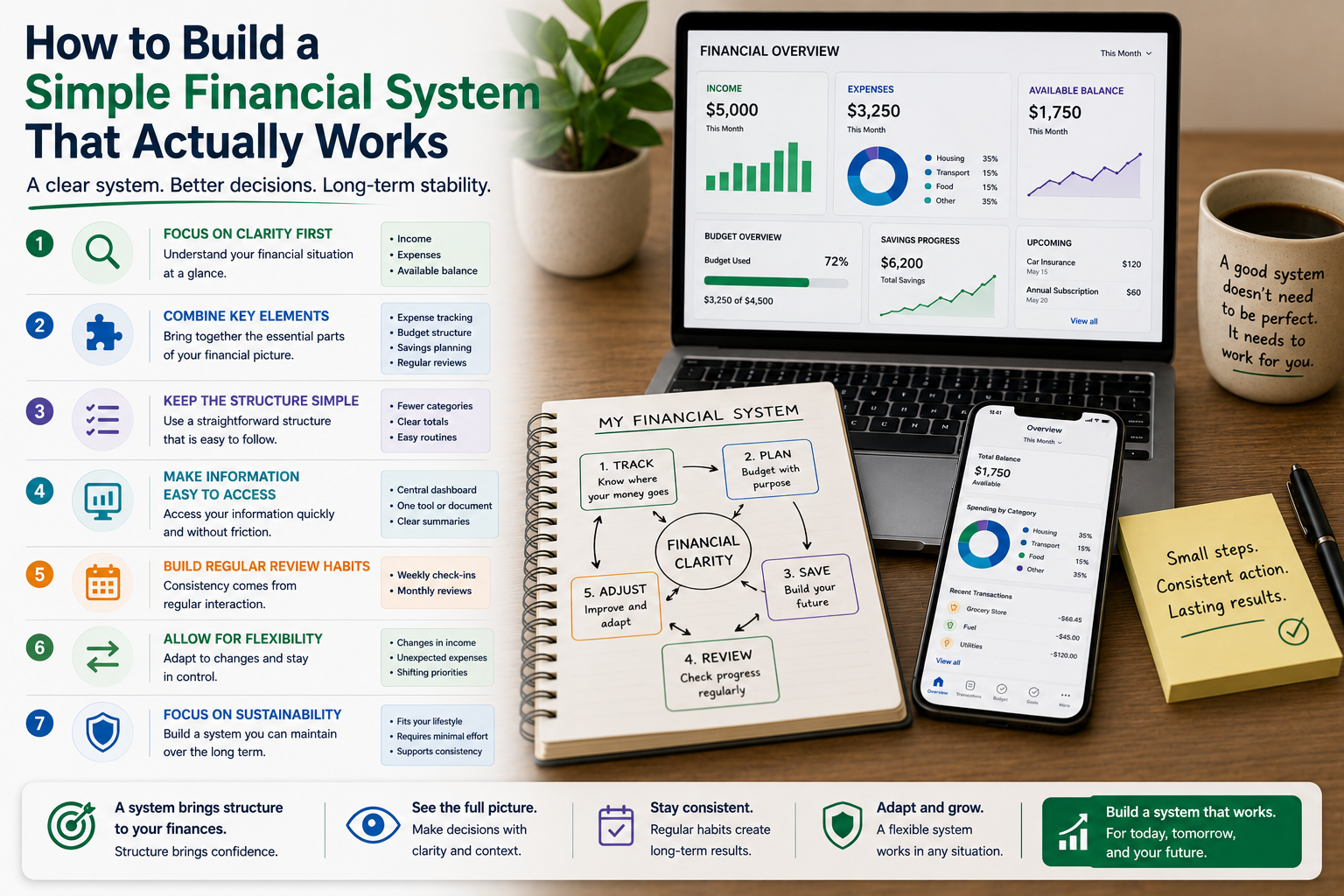
Many people try different methods to manage their money, but without a clear structure, these methods can become difficult to maintain. A simple financial system can help organize your finances and support consistent decision-making.
This guide outlines how to create a practical system that fits your situation and is easy to maintain over time.
1. Focus on Clarity First
A financial system should make your situation easier to understand.
At a minimum, it should show:
- Your income
- Your expenses
- Your available balance
Clarity helps you make informed decisions without unnecessary complexity.
2. Combine Key Elements
An effective system typically includes several basic components:
- Expense tracking
- Budget structure
- Savings planning
- Regular reviews
Each element supports a different part of your financial picture.
3. Keep the Structure Simple
Overly complex systems can be difficult to maintain.
A simpler structure may include:
- A limited number of categories
- A clear overview of totals
- Easy-to-follow routines
Simplicity increases the likelihood of long-term use.
4. Make Information Easy to Access
Your system should allow you to quickly check your financial status.
This may include:
- A central dashboard
- A single document or tool
- Clear summaries
Accessibility reduces the effort required to stay informed.
5. Build Regular Review Habits
A financial system is most effective when it is used consistently.
You can establish:
- Weekly reviews for awareness
- Monthly reviews for adjustments
Regular interaction helps maintain control.
6. Allow for Flexibility
No system should be completely rigid.
Your system should adapt to:
- Changes in income
- Unexpected expenses
- Shifting priorities
Flexibility helps maintain stability over time.
7. Focus on Sustainability
The goal is not to create a perfect system, but one that you can maintain.
A sustainable system:
- Fits your lifestyle
- Requires minimal effort
- Supports consistent use
Consistency is more valuable than complexity
Final Thoughts
A simple financial system can provide structure and clarity without unnecessary complexity. By focusing on essential elements and maintaining consistency, you can build a system that supports long-term financial stability.